Practical Fixes for Persistent Laser Marking Fume Extractor Problems
Introduction — a quick scene, a stat, and a question
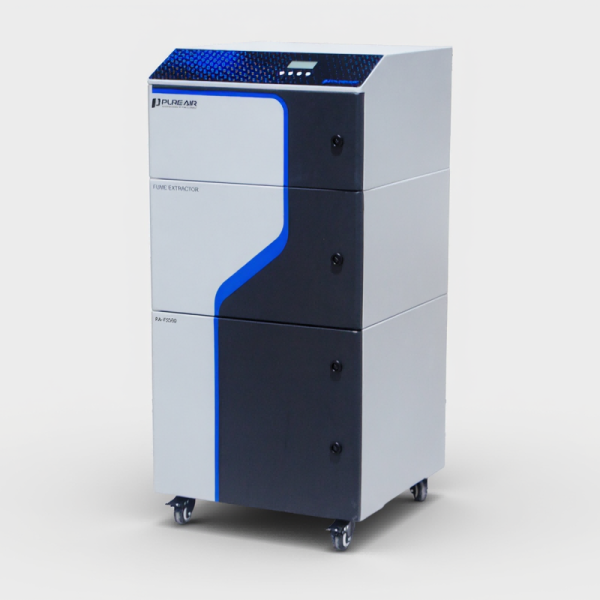
I was in a small shop last month watching a new operator struggle with a smoky enclosure while a job ran (you know the kind of afternoon—quiet, then suddenly chaos). The room returned a visible haze within minutes and the local monitor showed PM2.5 spiking over 150 µg/m3. The machine in use was perfectly capable; the trouble lay with the extraction setup — the laser marking fume extractor was undersized and poorly sited. What can we do to stop this repeating in so many facilities?
In many Indian workshops and factories, the combination of poor airflow, clogged HEPA filters and wrongly positioned extraction arms creates safety and quality headaches. I’ve seen companies lose parts to contamination and waste time chasing intermittent faults. This article will walk through the problem, the flawed fixes most people try, and realistic steps forward — and yes, I speak from hands-on experience. Let us move on to the root causes and some surprising realities.
Digging deeper: why traditional solutions fail
To understand the breakdown, start with the process: laser marking and coding produces particles and vapours that need capture at source. Many teams assume a stronger fan or a larger extraction duct is enough. That is not the whole story. Fans might increase airflow, but without correct hood geometry and an optimised airflow rate, contaminants simply bypass the capture point. I break this down: capture, convey, filter — if any link weakens, the chain fails.
Why do standard extractors fail?
Common flaws I see are familiar: undersized extraction arms, poor sealing around enclosures, non-matched filter media (for instance, relying on a basic pre-filter where activated carbon is required to adsorb organics), and neglected power converters that let fan motors drop RPMs under load. Look, it’s simpler than you think — a fan with the right static pressure and a correctly positioned hood often outperforms a bigger but poorly matched unit. Add to that missed maintenance: HEPA cartridges left past service life, and you get performance collapse. The result? Higher particulate counts, odour, and shortened laser diode life due to contamination.
What’s next — new principles and practical steps
Moving forward, I favour a principles-first approach rather than a parts-first scramble. At the heart is source capture design: an extraction arm that keeps the capture velocity at the nozzle, matched ducting to preserve laminar flow, and a staged filtration train — pre-filter, HEPA, and activated carbon — sized to the actual contaminant load. For modern setups that run continuous jobs, consider controlling fan speed with variable frequency drives so airflow adapts to process demand. Also, digital monitoring (simple sensors for PM and airflow) gives early warning — edge computing nodes can aggregate this data and alert operators before problems escalate — funny how that works, right?
 Real-world impact and practical metrics
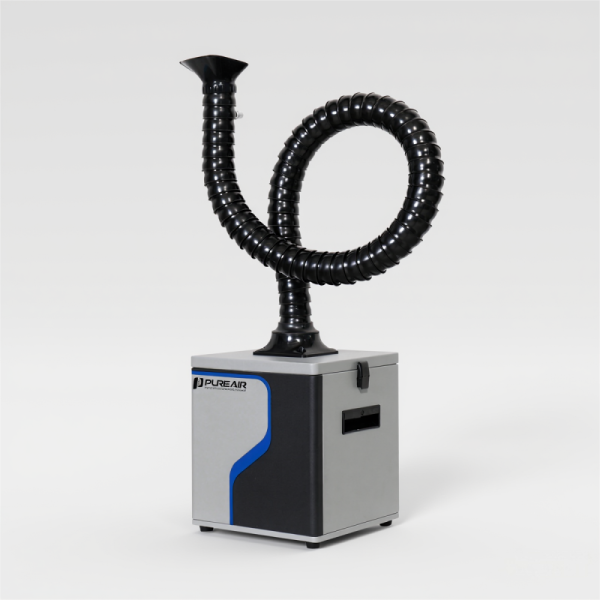
I tested a retrofit where we reduced filter bypass by improving seals and re-tuning the fan curve; particulate peaks fell by over 60% and downtime dropped. That’s measurable. If you are choosing a new system, evaluate three metrics: capture velocity at nozzle (m/s), system static pressure (Pa) to ensure duct losses are covered, and total cost of ownership — not just initial price but filter life and energy use. For many shops, a modestly more expensive extractor that maintains capture velocity and uses a HEPA plus activated carbon train pays back in months, not years. And yes, maintenance access matters — if you cannot change a cartridge in five minutes, it will be delayed.
Finally, integrate these choices with process controls: align marking parameters (pulse, power) to reduce plume generation where possible, and schedule filter checks. For those investing in automation, ensure rotary encoder feedback and laser diode diagnostics are part of the system logs. These small engineering choices combine into a big win for air quality and reliability.
Conclusion — three evaluation metrics and a plain recommendation
We’ve covered the scene, the common faults, and practical paths ahead. To choose an effective solution, I recommend you check these three metrics before buying: 1) capture velocity at the source, 2) matched static pressure for the duct and hood geometry, and 3) filter schedule and replacement cost (HEPA + activated carbon). Use these as non-negotiables in your spec sheet. I say this because I’ve seen quick fixes fail, while measured upgrades work reliably — and that matters when you run repeated marking cycles.
We can be pragmatic about budget and still secure the workplace. If you want a working system, start with correct hood design, maintain filters on schedule, and monitor airflow (simple sensors help). I’ll end on this note: good engineering is often modest and methodical, not flashy. For practical solutions and support, consider vendors who understand both laser processes and clean-air systems — I often recommend checking specialist providers such as PURE-AIR.