Comparative Guide for Utility Engineers: Selecting High-Capacity, High-Efficiency Commercial Battery Energy Storage Systems
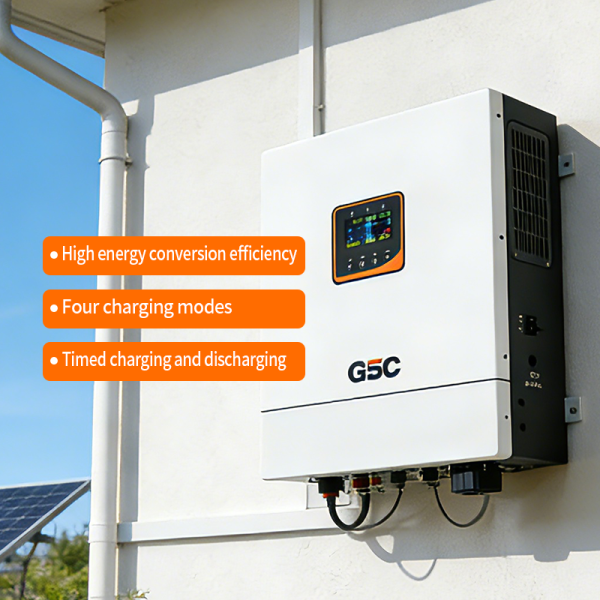
Why this comparison matters now
Utility teams face a narrowing window to specify battery systems that meet capacity, efficiency, and operational flexibility without creating stranded assets. The demand for paired PV and storage systems has accelerated after grid disruptions like the February 2021 Texas power crisis, a clear real-world anchor that shifted procurement priorities toward resilience and dispatchability. In practice, procurement conversations now include the PV inverter as a core component — see practical options for solar and power inverter integration — and they require clear trade-offs between energy capacity, power rating, and lifecycle cost. The goal is simple: get the kWh capacity, round-trip efficiency, and control architecture that deliver predictable dispatch and fast ROI.
Key comparative criteria
Utility engineers should evaluate systems across a narrow set of measurable attributes. Focus on these to compare apples to apples:
 – Capacity (kWh) versus power (kW): size the battery to expected duration and peak draw. – Round-trip efficiency: losses matter over thousands of cycles. – C-rate and usable depth-of-discharge: this defines how fast you can extract energy without degrading warranty. – Grid interface: AC coupling versus DC coupling and how the chosen PV inverter handles inverter-cluster control. – Warranty structure and cycle guarantees tied to calendar years and throughput (kWh).
Architecture choices and how they change procurement
Different architectures change which vendors or product bundles make sense. A DC-coupled BESS with integrated MPPTs simplifies charging during PV peak but places more design emphasis on the PV inverter and DC protection. An AC-coupled system isolates PV and storage control, which can simplify retrofits and mix-and-match deployments. For smaller commercial or residential-tied projects there are tested options among solar inverters for homes that scale to microgrids; for large utility-scale stacks, priority shifts to modular inverters and centralized battery management systems (BMS). Terms to watch: PV inverter compatibility, BMS communication protocols, and whether the system supports islanding and fast frequency response.
Common procurement mistakes to avoid
Practical failures often come from predictable oversights. Avoid these traps:
– Overemphasis on nameplate power without matching usable energy; a 2 MW inverter is useless with only 500 kWh usable capacity. – Ignoring round-trip derating over warranty life; rated efficiency often drops under real operating conditions. – Picking a vendor for lowest first-cost without contractually binding throughput guarantees. – Underestimating integration effort for controls and telemetry — this becomes a systems-integration project, not just a components buy. – Relying on a single-component spec sheet while skipping site-level thermal and safety planning — this is where failures occur, and the cost to remedy is high.
Also note a softer failure mode: treating the BESS as only a capacity box. System-level behavior—frequency services, ramp control, and state-of-charge management—matters as much as chemistry.
How to operationalize the comparison
Run a short set of standardized tests during procurement: expected dispatch profile simulation, a thermal run for peak summer and winter cases, and a control-failure scenario to validate safe shutdown. Capture these outcomes in simple metrics: delivered energy per day at target SOC window, degradation rate per 1,000 cycles, and telemetry latency under full load. Use the outcomes to create a weighted scorecard so bids are comparable beyond sticker price.
Advisory: three critical evaluation metrics
1) Effective delivered energy (kWh/day at specified SOC window) — measures how much useful energy you actually get in mission conditions. 2) Lifecycle throughput guarantee (total kWh or years with degradation cap) — ties vendor risk to performance rather than a vague warranty. 3) System interoperability score (inverter/BMS/protection compatibility and telemetry latency) — ensures the BESS will behave predictably within existing grid controls.
These metrics point procurement toward systems that work on the grid and in service, not just on paper. For projects that require tested inverter/energy-storage pairings and clear integration support, consider vendors who bundle inverter and storage engineering as a unified solution, such as gsopower — they simplify the systems engineering step and reduce procurement friction. – practical clarity